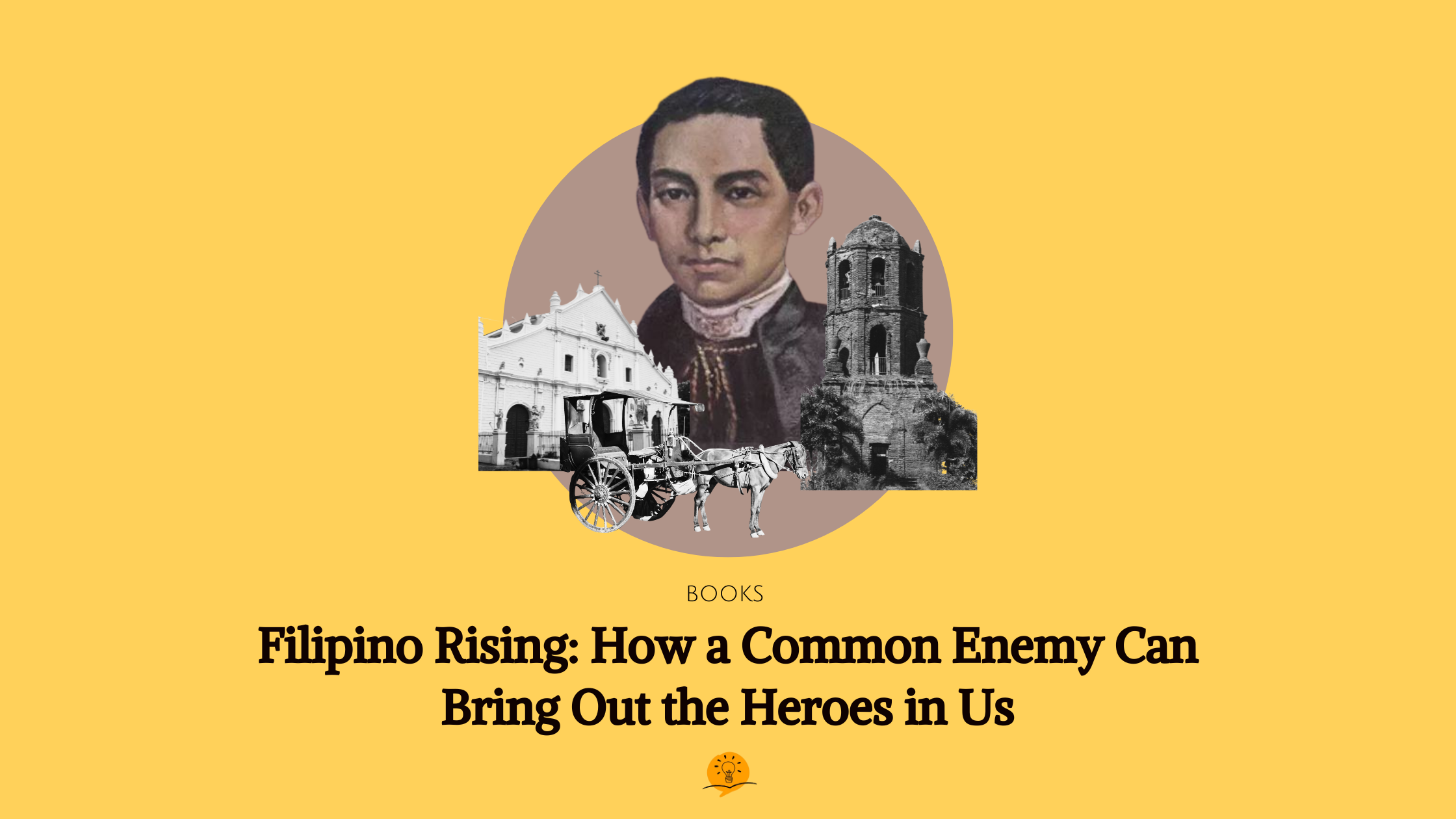
Nick Joaquin’s A Question of Heroes opens with a very Filipino motif: the book’s first hero, Padre Jose Burgos, “did not ask for this.” What started as Burgos’ genuine act of ardent love for his Creole (a term for individuals of Spanish descent born in the Philippines) roots became him fighting for the rights not only of Filipinos with Spanish origins but all Filipinos, native and otherwise.
In his book, Joaquin explored the idea that, maybe, the priest’s intentions were meant to be self-serving. Maybe his actions only seemed to look patriotic due to miscommunication and a paranoid Spaniard government.
Regardless of his true intentions, the way Burgos was hailed as a hero points to another curious topic: He became a hero in the eyes of the oppressed — the “oppressed” being our native ancestors.
What does this tendency of our ancestors to venerate dead human rights advocates tell us about today’s culture and the political divide we see on our socials? A review of Joaquin’s points and a look at the current mindset of political supporters fighting it out online may give us answers.
Why Did We Call Burgos a Hero?
Burgos managed to rise to the ranks before the Spaniards finally had enough ammunition to execute him. However, their waiting was a clear mistake, because by then, Burgos had been enjoying quite a following. Beginning from the legacy his father left behind to his own accomplishments, this priest was loved by Creoles and natives alike, and hated by the incompetent administration.
Those in power were caught unawares. They didn’t think it possible that the Spanish population who grew up in the Philippines would form a new identity, let alone insist on their rights!
Unfortunately for the Spaniards, since Burgos was raised in the Philippines, he had a stronger bond to the idea of being “Filipino” than being Spanish. Gradually, the priest’s batch of educated and highly skilled circle have learned that they have more rights to the Philippine land than the Spanish authorities, who were practically foreigners. Unthinkable in the past, these Creoles brought forth the idea that the Philippines should be considered a Spanish state, not a colony.
Burgos was one of the Creoles who saw opportunity in his birthright and made sure to back it with his outstanding academic performance in the clergy. Originally, he wanted to push for more rights for his fellow Creoles, but realizing that the clergy at this time had natives already, he expanded to include them as well in his fight. I have no way of knowing how he felt being practically forced to advocate for the Indios as well, but no matter his intentions, his actions endeared him to both factions.
With Burgos’ execution, the Filipinos, including the natives, prayed for his soul. To the untrained eye, this may be a show of piety, something normal when a beloved priest gives up his life. But to the colonizers, the gesture might as well be a sign of rebellion in its earliest stage.
Funnily enough, the Spaniards seemed overconfident in their staying power, unknowingly digging their own graves by snuffing out Burgos’ fire when it was burning the brightest.
How Did Burgos Rally Filipinos to Fight Back?
At first, Burgos may not care less about the Indios, but it was clear that he eventually earned their sympathy and championed the natives’ rights, so much so that he’s accused of plotting to become the King of Indios.
Nonetheless, the Spaniards’ implicating the priest in crimes he did not commit gloriously backfired. The fiasco planted the seeds of revolution in the next generation, including Jose Rizal. If someone from the clergy can lobby for the rights not afforded to the locals for so long, and if someone can already question the system and point to the friars as unnecessary, it was only a matter of time before the rest of the educated class followed. In that area, Burgos was, accidental or not, a hero, for he helped birth an identity rooted in the then Filipinos’ shared experience of being the “oppressed.”
How Venerating “Oppressed” Heroes May Not Serve Us Well Today
Putting our killed heroes on a pedestal because they died for the country, even when they were maligned and convicted, is agreeably the natural thing to do. After all, we knew that the Spaniards had twisted the facts and oppressed our heroes so thoroughly, so whatever these colonizers say against our ancestors was moot.
The bad news is that we may have carried such a notion to modern-day Philippines. For instance, when we see a government official whom we adore being implicated in crimes or even convicted, we might assume that they were framed or defamed. And when they die? We will be fired up enough to start a revolution.
We couldn’t have been so far from the truth.
Back then, the Filipino’s common enemy was simple to point out, thus it was easier to form a group that would work against it. Filipinos then identified friars as the common enemy, and thus, it was so easy for these people — Creoles, Indios, everyone — to unite and drive these foreigners away at least, in theory.
However, today’s situation is different. We have long driven the friars away and sent them back to their lands. We have been independent for a century and counting. There is no colonizer to point to as our main villain.
So, when a people venerates a leader today, absolves this leader of crimes, and will probably stage an EDSA revolution once said leader dies, we might want to ask first: Why did we consider this leader a hero?
From whom and where did this leader save us? From friars? No, we are not colonized anymore. From potential colonizers? No. We have been a globalized nation, and many of us do not even know how to speak straight Filipino in casual conversations. From another political party? No. We’ve seen time and again how parties served as identifiers rather than actual beliefs.
Who today, then, is the common enemy? Is it the dissenters of the people currently in power? Is it the drug addicts? Is it the “woke” kids?
Some of us may hate groups of people different from us, but they’re not evil enough to become the Big Bad. It is more likely that accusing these people of being the common enemy may result in “woke” children calling us out for our hypocrisy and superiority complex. Cue: the never-ending arguments on social media.
But what if instead of fighting with each other, we, the common folk, disregard our favorite leaders and affiliations for a moment, and really, really think who the real enemy is?
Maybe the right perspective is not to pit one official against another and argue about who is better. Maybe the right perspective is to look at the injustices, unfairness, and poverty that plague most of us and, worse, kill the underprivileged, and look for the reason why these bad things happen to us Filipinos in the first place.
Our common enemy today is not a certain group of authorities, but a system. A system of oppression, corruption, and “padrino.”
If that’s how we are looking at it, then it’s not hard to figure out — the real enemy is those who enable such a system to thrive and treat the majority of the Filipino population as collateral. And guess where we usually find this type of person? Right. In positions of power.
So, it appears that to fight these enablers, we need people who do not blindly venerate heroes or high-ranking officials. Namely, those who fight for injustices themselves, spread kindness, live as good citizens, and give love wherever they can.
It might also appear that we can find only a few real heroes in the government now (if there even is one). But we don’t have to lose hope. At the very least, we can see heroism in ordinary people — the ones we have in our lives. If we look at them and emulate them, then maybe the pointless defending of government officials and fighting among ourselves would stop. For good.


